





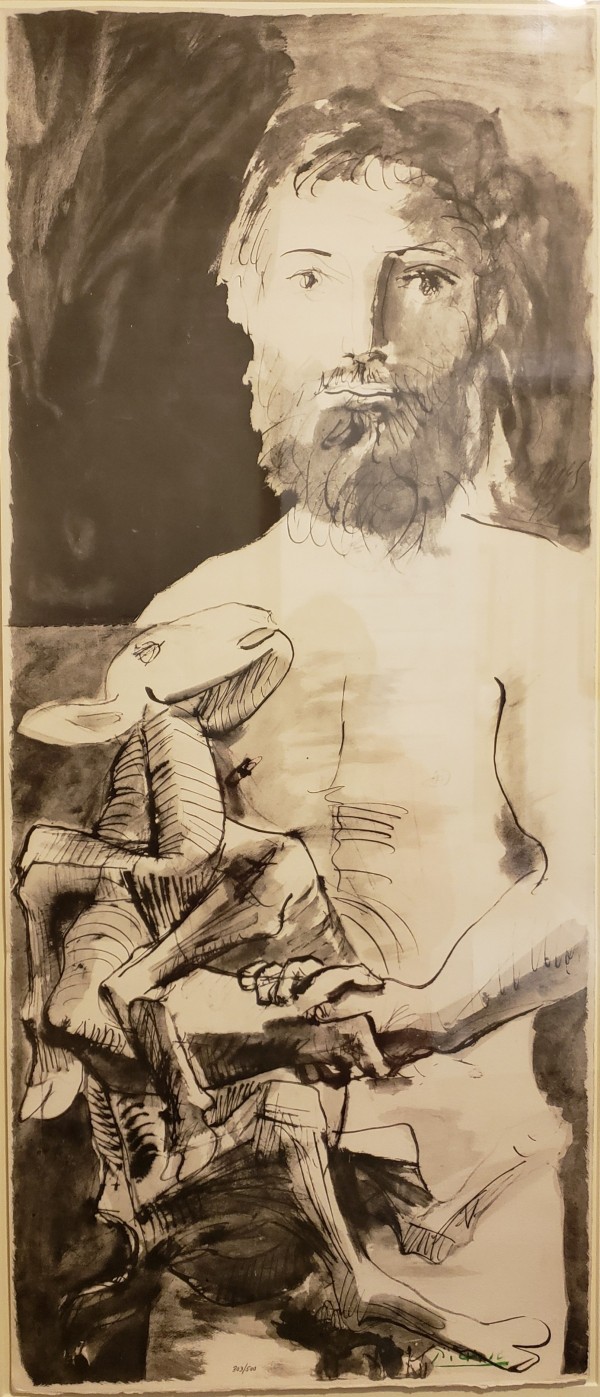
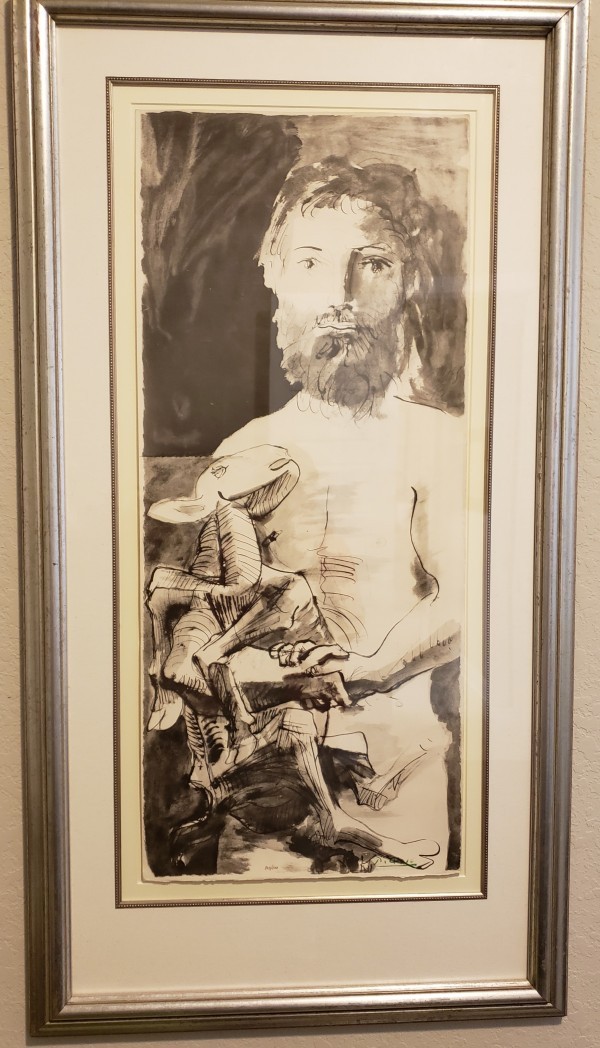


"Etude pour l'Homme au Mouton" (Study for Man with Goat)
Pablo Picasso
Make an Offer / Ask A Question
(You must be registered to submit an offer or ask a question. Please register HERE first)
Make an Offer / Ask A Question
(You must be registered to submit an offer or ask a question. Please register HERE first)
"Etude pour l'Homme au Mouton" (Study for Man with Goat)
Pablo Picasso
Make an Offer / Ask A Question
(You must be registered to submit an offer or ask a question. Please register HERE first)
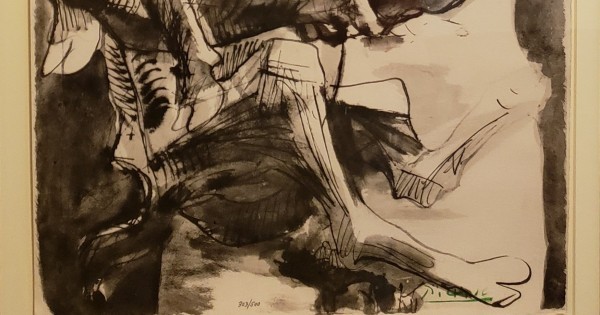
Etude pour l'Homme au Mouton (Study for Man with Goat), after the preliminary watercolor tribute to Max Jacob done in 1943. Handmade in Studio Daniel Jacomet, Paris. From the "La flûte double" portfolio in 1967. Picasso signature stamp at bottom right.
Visual Style and Composition
• Form & Lineage: The artwork features a central figure—typically a standing or seated youth—holding or cradling a goat. Picasso uses strong, expressive contours and simplified geometric planes to outline the figures.
• Cubist & Classical Elements: Depending on the specific piece, the style bridges his early classical figure studies with late Cubism. The man's face often incorporates subtle shading and multidimensional planes, while the body and animal are rendered in bold, overlapping linework.
• Palette & Texture: Drawings and prints feature a restrained palette of charcoal, washes, or monochrome ink, focusing on raw form rather than vibrant color.
Themes and Symbolism
• Pastoral Symbolism: Rooted in Mediterranean tradition, the goat symbolizes vitality, rustic abundance, and resilience—a gentler contrast to the aggressive, combative energy of Picasso's famous bulls.
• Tenderness & Solitude: The pose conveys a quiet, protective intimacy between the human figure and the animal, a recurring motif during Picasso's work in the 1940s.


